
Squidstat Scientific Spotlight - July 2026

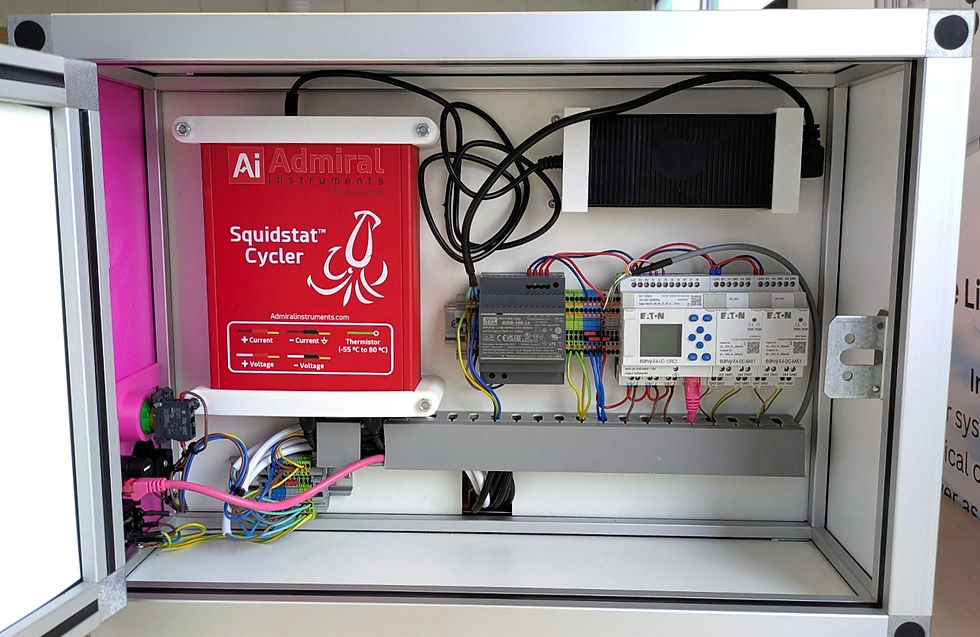
Photo credit: IonIQs automated waste stream purification setup, powered and controlled by Admiral Instruments’ Squidstat Cycler. Used with permission.
Our Squidstat Scientific Spotlight Series highlights the exciting work of researchers using Squidstat instruments around the world.
This edition features the work of IonIQs, Dutch pioneers developing innovative lithium salt purification technology. Fewer impurities mean safer, more efficient batteries.
Lithium Salt Purity: A Critical Challenge to Solve
Battery-grade lithium salts requires >99.5% purity. IonIQs has hit this milestone at lab scale, treating lithium waste streams and selectively removing impurities. The goal is to make Li refineries more efficient by increasing process yield, reducing water usage and lowering CO2 emissions. IonIQs’ system is now ready for global demonstrations, and their next stop is Chile.
Squidstat Cyclers serve as both the power source and controller for IonIQs' automated purification system. Over the past few years, Admiral Instruments has supported IonIQs in integrating the Squidstat into this system, enabling the precise, automated control their purification process depends on.
Connect with IonIQs
IonIQs' mission is to enable efficient, sustainable lithium recovery that supports the energy transition and advances a circular economy.
If you're interested in learning more about their technology, exploring partnership opportunities, or seeing how their system works, start by watching their LinkedIn video introduction for an overview of their approach and vision.
Reach out to IonIQs on their website’s contact page.

IonIQs portable demonstration unit, designed to bring the technology directly to customers. Used with permission
Want to Be Featured in Our Squidstat Scientific Spotlight Series?
Are you using Squidstat instruments in your research? We’d love to showcase your work to thousands of electrochemistry professionals. It’s free and only takes about 5 minutes to submit. Submit your work and join an upcoming edition of our Squidstat Scientific Spotlight Series.


Comments